2026-10-24 · Robert "Bobby" Sanchez
How to Flush Sediment from Your Water Heater in Texas City
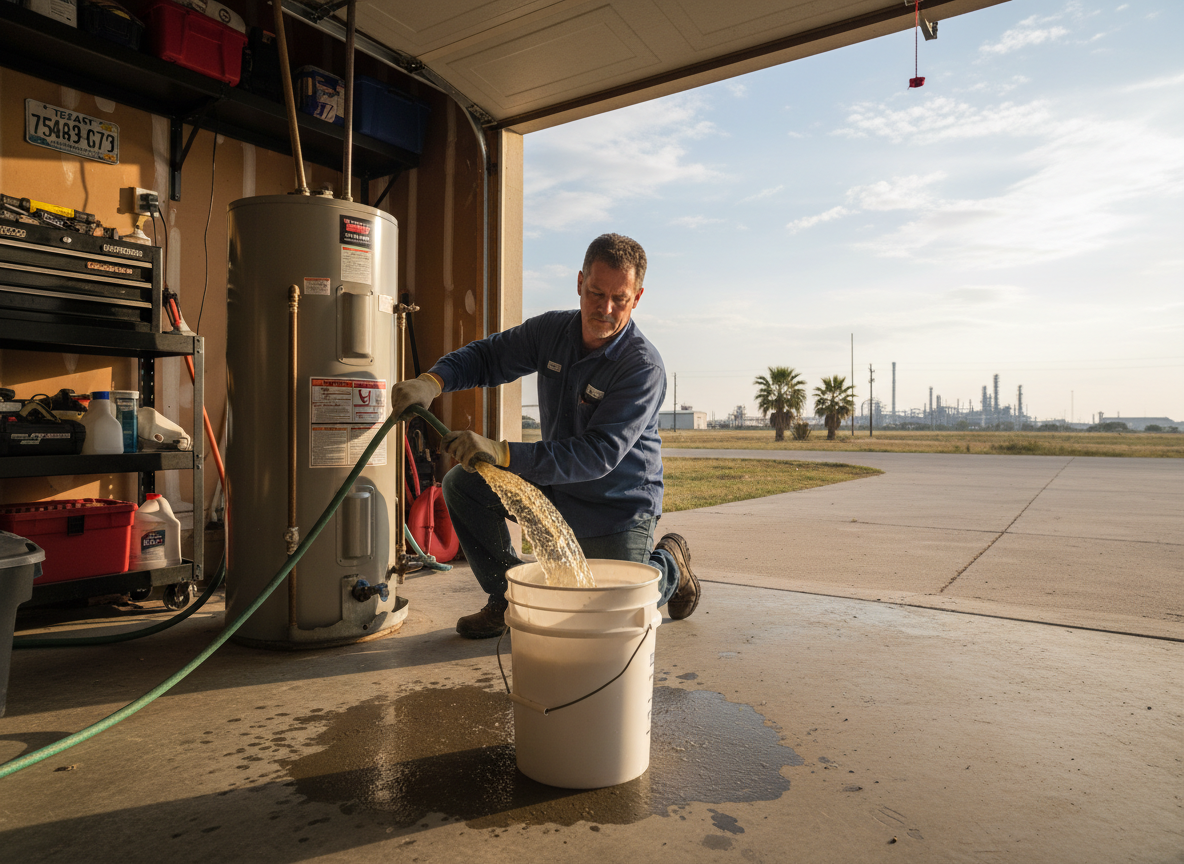
To effectively flush sediment from your water heater in Texas City, you should aim to perform this maintenance task at least once a year, though homes in areas with harder water, like parts of Galveston County, might benefit from a flush every 6 to 8 months. The process involves shutting off the water and power, connecting a hose to the drain valve, and allowing the tank to empty completely, carrying out accumulated mineral deposits. This routine upkeep prevents common issues like reduced heating efficiency, unusual noises, and premature system failure, which can be particularly frustrating during our hot summers or unexpected mild winter cold snaps.
Why Flushing is Essential for Texas City Water Heaters
Texas City's humid subtropical climate and its location near the coast mean that our municipal water supply, while treated, can still carry a higher concentration of minerals and sediment compared to other regions. Over time, these minerals, primarily calcium and magnesium, settle at the bottom of your water heater tank. This accumulation creates a barrier between the heating element or burner and the water, forcing your unit to work harder and consume more energy to heat the same amount of water. For residents in neighborhoods like Downtown Texas City or Bay Street, where many homes have older plumbing systems, regular flushing is even more critical to prevent these deposits from hardening and causing significant damage. Ignoring this maintenance can lead to a shorter lifespan for your appliance, often requiring a full Water Heater Replacement sooner than the typical 8–12 years.
Sediment buildup doesn't just impact efficiency; it can also lead to a range of operational problems. You might start noticing your water heater making unusual noises, often described as popping or rumbling, which is the sound of water trapped under the sediment boiling. This can be an early indicator that a flush is overdue. Additionally, sediment can corrode the tank from the inside out, leading to leaks. Given the hurricane risk and general humidity in our area, preventing leaks is paramount to avoiding costly water damage to your home. Proactive maintenance, including flushing, is a simple way to mitigate these risks and ensure your water heater provides reliable hot water for your family, whether you're in Texas City Junction or near the Texas City Dike.
Tools and Materials You'll Need
Before you begin flushing your water heater, gather all the necessary tools and materials. Having everything on hand will make the process smoother and more efficient. You won't need specialized equipment, just a few common household items. Make sure you have a standard garden hose long enough to reach from your water heater to a suitable drainage point, such as a floor drain, utility sink, or even outside your home. You'll also need a bucket, a flathead screwdriver or socket wrench (depending on your drain valve type), and a pair of work gloves. For gas water heaters, locate your pilot light relighting instructions in advance. If your drain valve is old or corroded, it's a good idea to have a replacement on hand, though this is less common for routine flushing. Always prioritize safety, especially when working with water and electricity or gas.
For those with tankless water heaters, the flushing process is slightly different and often involves a descaling solution, but the principle of removing mineral buildup remains the same. This guide focuses on traditional tank-style water heaters, which are prevalent in many homes across Texas City, La Marque, and Dickinson. If you're unsure about any step or notice significant corrosion, it's always best to consult with a professional. Sometimes, what seems like a simple flush can uncover underlying issues that might require a Water Heater Repair from an experienced technician.
Step-by-Step Flushing Procedure
1. Turn Off the Power and Water Supply: Safety first. For electric water heaters, locate your circuit breaker panel and switch off the breaker labeled for the water heater. For gas models, turn the gas control valve to the "OFF" or "PILOT" setting. Next, locate the cold-water inlet valve at the top of your water heater and turn it clockwise until it's completely closed. This stops new water from entering the tank. If you're in a home near Memorial Park, you might have an older system where these valves could be a bit stiff, so proceed with care.
2. Open a Hot Water Faucet: Go to any hot water faucet in your home, such as in a kitchen or bathroom sink, and turn it on. This will help relieve pressure in the system and allow air into the tank, facilitating drainage. Let it run for a few minutes until the water flow significantly slows or stops.
3. Connect a Garden Hose: Attach one end of your garden hose to the drain valve located at the bottom of your water heater. Ensure the connection is snug to prevent leaks. Direct the other end of the hose to a suitable drainage area. This could be a floor drain in your garage, a utility sink, or outside your home. Make sure the hose is laid out so it drains downhill, preventing water from pooling. The water coming out will initially be hot, so avoid directing it onto delicate plants or surfaces.
4. Open the Drain Valve: Using a flathead screwdriver or socket wrench, slowly open the drain valve on the water heater. You'll hear water begin to flow through the hose. Initially, the water might appear cloudy, discolored, or even contain small particles – this is the sediment being flushed out. Allow the tank to drain completely. For a 40-gallon tank, this might take 20–30 minutes, while a larger 50-gallon or 60-gallon tank could take longer. Observe the water coming out; once it runs clear, you've successfully flushed out most of the sediment.